
Frontier at WHX Labs Dubai 2026 advancing international partnerships


Frontier is attending WHX Labs Dubai this week, one of the region’s leading trade fairs for laboratory and diagnostic innovation. The visit is being led by Frontier’s Dr. Martin Burow and Marlon Luyahan.

Frontier’s participation is part-funded by Diagnostic Net BB, the diagnostics network supporting innovation across the Berlin-Brandenburg region. 

A key focus of the Dubai visit will be meeting key contacts from South East Asia – where we are already in active discussion. This is a great opportunity to progress conversations and explore potential collaborations.

Martin and Marlon will also engage with international exhibitors, researchers and industry leaders to share Frontier’s work and demonstrate the Sentinel qCTC platform.

WHX Labs Dubai brings together global stakeholders across healthcare, diagnostics and life sciences – an ideal platform to support Frontier’s continued international engagement in support of improved diagnostic solutions.

ABC International Consensus Conference – Programme Highlights

ABC INTERNATIONAL CONSENSUS CONFERENCE – PROGRAMME HIGHLIGHTS

From 6–8 November 2025, leading clinicians, researchers, and patient advocates gathered at the Advanced Breast Cancer (ABC) International Consensus Conference — the premier global meeting dedicated to improving care and outcomes for people living with advanced breast cancer. This conference brought together evidence-based science, clinical practice updates, and collaborative discussions to shape international treatment standards and quality-of-life care across healthcare settings worldwide.  

CONFERENCE PROGRAMME OVERVIEW 

OPENING PLENARY & GLOBAL ABC LANDSCAPE

The meeting opened with an international overview of advanced breast cancer — examining current survival trends, emerging treatments, and remaining challenges in global care. Experts highlighted progress in targeted therapies and antibody-drug conjugates, as well as the persistent need for equitable access to diagnostics and medicines.  

SCIENTIFIC SESSIONS ON TREATMENT ADVANCES

A series of scientific talks focused on the latest clinical evidence across key ABC subtypes, including;
  • Hormone receptor-positive/HER2-negative advanced breast cancer
  • HER2-positive disease treatment strategies
  • Triple-negative ABC research and novel approaches
These sessions showcased the rapid evolution of personalised medicine in metastatic care and the ongoing importance of biomarker-driven treatment decisions.

MULTIDISCIPLINARY CARE & SUPPORTIVE PRACTICE WORKSHOPS

Interactive workshops brought together clinicians, nurses, and allied health professionals to discuss:
  • Best practices in multidisciplinary team coordination
  • Managing side effects and long-term therapy support
  • Integrating psychosocial care into routine clinical practice

PATIENT VOICES & ADVOCACY PANELS

True to the ABC Global Alliance’s ethos of patient-centred care, sessions included patient advocates sharing lived experience and priorities. Topics covered communication strategies, navigating work and daily life with advanced cancer, and improving dialogue between patients and health teams.

INTERNATIONAL CONSENSUS GUIDELINES UPDATE

A core component of the programme was the consensus guideline sessions, where experts reviewed evidence and drafted updates to the ABC International Consensus Guidelines — a globally recognised set of recommendations used by clinicians to inform optimal ABC management across diverse care settings.  

IMPLEMENTATION & EQUITY IN CARE

The programme also included panels on health systems, focusing on disparities in care access, real-world implementation challenges, and strategies to translate research into practice in low- and middle-income regions.

PARTICIPATION & PRESENCE FROM OUR TEAM 

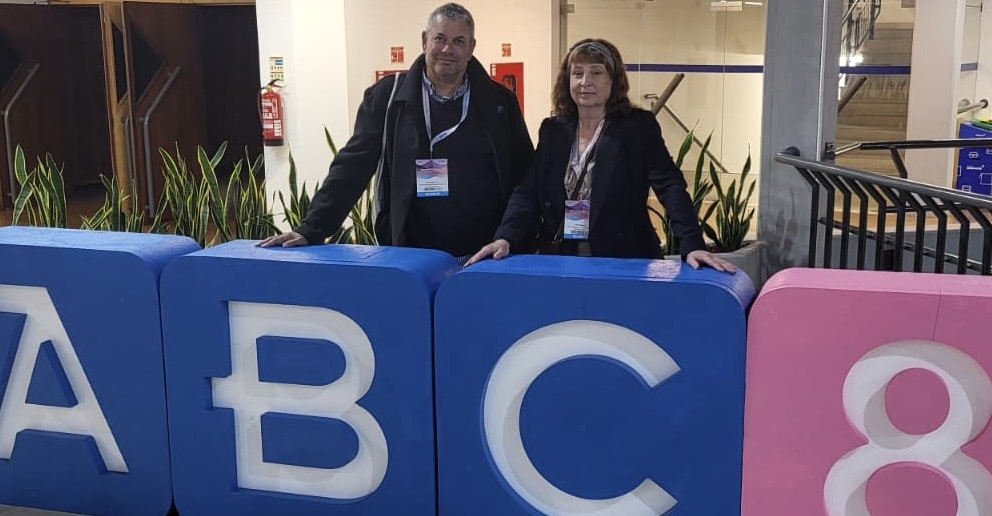
We are proud that Dr Burow, Dr Lee, and our Patient Advocate, Jane Rogerson-Gleave participated actively throughout the programme. They attended scientific sessions and guideline discussions, bringing insights from both clinical practice and patient experience. They met with presenters and conference organisers to exchange perspectives on patient priorities, communication challenges, and real-world care gaps. Jane Rogerson-Gleave’s voice reinforced the importance of living with advanced breast cancer as a partnership between patients and clinicians — not just a medical condition.
Their engagement helped ensure that patient perspectives were represented alongside scientific progress, and that conversations at the conference remain grounded in improving everyday care for people affected by advanced breast cancer.

WHY THIS MEETING MATTERS 

The ABC Consensus Conference programme reflects the state of the art in advanced breast cancer care and sets the direction for practice and policy in the years ahead. Key takeaways include:
  • Continued progress in targeted treatment and symptom management
  • A strong global focus on equity, access, and patient-centred communication
  • Updates to international guidelines that clinicians will use to guide care
This year’s programme reaffirmed that advancing outcomes requires science + systems + lived experience — and that progress grows stronger when patients and clinicians work together.

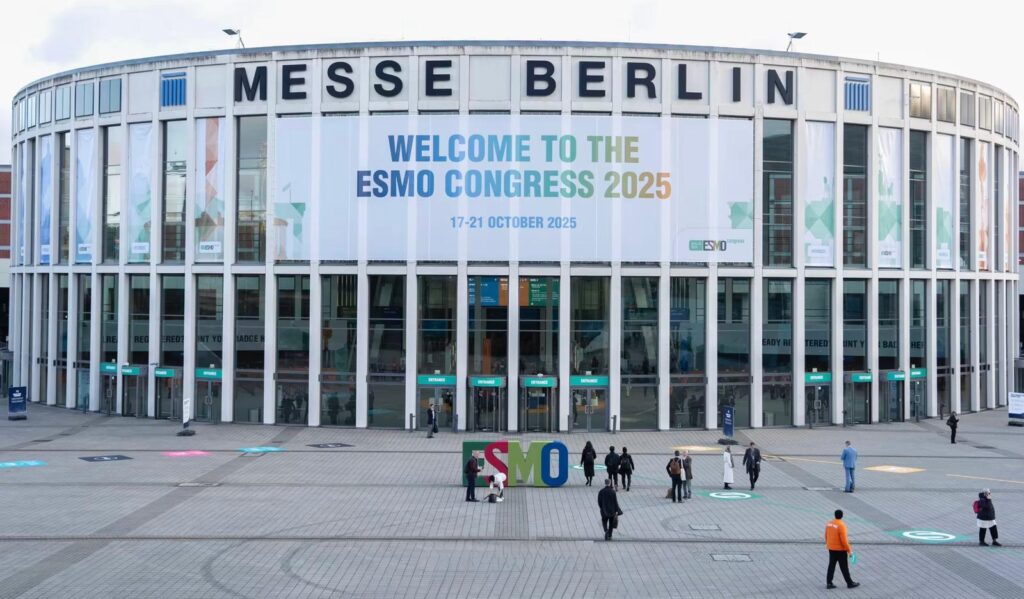
ESMO Congress 2025 – Berlin

ESMO Congress 2025 – Berlin

This week saw Frontier’s Dr Martin Burow and Dr Chris Lee at Breast Cancer 2025 in Berlin, one of the most influential global meetings dedicated to innovation and clinical progress in breast cancer research and treatment.

“With 33,000 participants, this is a major opportunity to connect with researchers and clinicians on the latest thinking. There is so much going on – it’s overwhelming – a fertile ground for new collaboration.”

Our participation at ESMO marks a key milestone in strengthening international collaboration and advancing our Sentinel qCTC system, as we continue to build a strong clinical and research network across Asia and Europe. In particular, the conference presents a valuable opportunity to:

  • Engage with a wide network of clinicians from the Philippines, expanding our regional connections and exploring potential integration of Sentinel qCTC into ongoing and future breast cancer research initiatives across Southeast Asia.
  • Reconnect with Japanese research partners following our productive meetings earlier this year in Japan, deepening dialogue around joint studies, CTC technology validation, and translational applications.
  • Identify new collaborative pathways with European investigators, fostering partnerships that align with Frontiers’ vision of precision oncology through liquid biopsy innovation.

SCIENTIFIC AND STRATEGIC FOCUS

The ESMO Breast Cancer Congress provides a comprehensive update on the rapidly evolving field of breast cancer care—covering diagnostics, molecular biomarkers, targeted therapies, and clinical management. For the Frontier team, participation will deliver insights of immense strategic value to the ongoing development and deployment of the Sentinel qCTC system, specifically through:

  • Advancing knowledge in breast cancer diagnostics and biomarkers, directly informing how CTC detection and profiling can enhance personalized treatment decisions.
  • Understanding new developments in antibody-drug conjugates (ADCs) and how these emerging therapeutic classes could be monitored via CTC phenotyping and molecular characterisation.
  • Gaining a deeper grasp of subtype-specific strategies—for Luminal, HER2-positive, HER2-low, and triple-negative breast cancers—where real-time CTC tracking can be pivotal in assessing therapeutic response and disease progression.
  • Exploring special considerations across diverse patient subgroups, supporting Sentinel qCTC’s adaptability to a range of clinical and biological contexts.

By connecting with world-leading clinicians and researchers, Frontier continues to advance its mission: transforming precision oncology through accessible, high-performance CTC technology that empowers clinicians to make data-driven, patient-specific decisions.

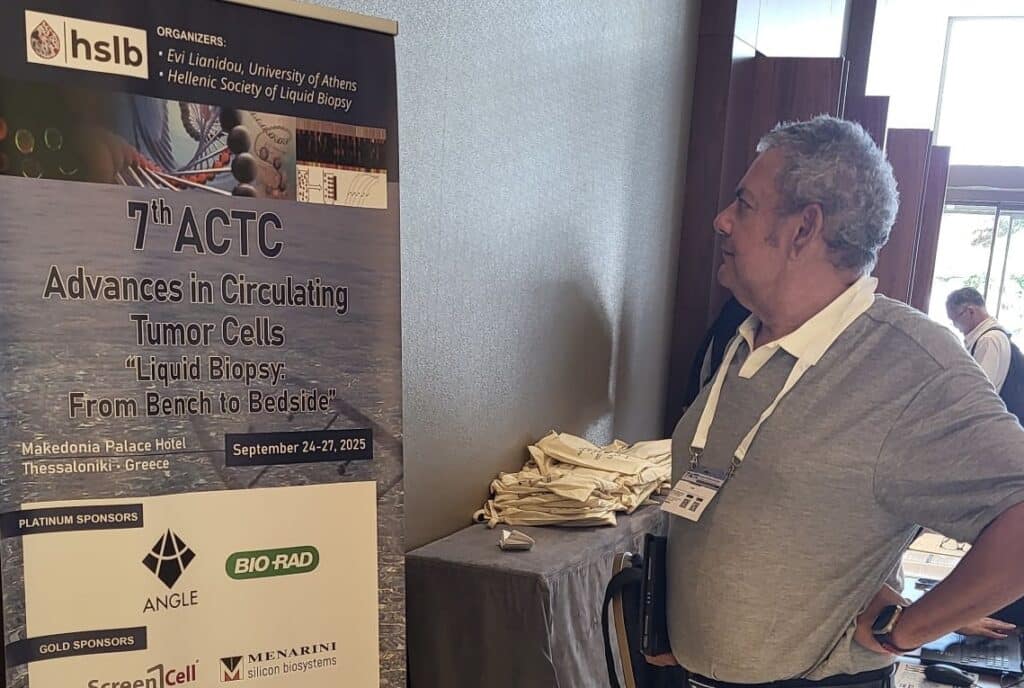
Frontier at ACTC 2025 – Thessaloniki

The 7th Advances in Circulating Tumor Cells (ACTC 2025) conference in Thessaloniki brought together international leaders in liquid biopsy research, from basic biology to clinical translation. Frontier’s own Dr. Lee and Dr. Burow were there to evaluate the global state of the field and position the qCTC system within ongoing conversations about the future of circulating tumour cell (CTC) technologies.

Dr Lee commented; “It’s really important for us to talk to key opinion leaders, compare our qCTC with others and gather the latest intelligence on validation pathways and clinical adoption challenges. Just sharing perspectives at plenary and poster sessions has meant we’re able to assess how our approach – balancing technical precision with clinical usability – —compares to emerging enrichment-free and multi-omic competitors. These insights are critical for refining qCTC development and ensuring it meets both scientific rigour and clinical relevance.”

Frontier’s qCTC System in the Context of ACTC
A central theme at ACTC 2025 has been the urgent need for quantitative, reproducible, and clinically actionable CTC analysis. Presentations have highlighted how enrichment-free platforms, high-volume detection, and multi-omic profiling are reshaping expectations for liquid biopsy. Against this backdrop, the qCTC system’s vision—delivering reliable CTC enumeration coupled with molecular depth from a single blood draw—is strongly aligned with where the field is heading.
The emphasis on minimal residual disease detection, therapy monitoring, and integration of CTC and ctDNA further validated Frontier’s strategy. While Frontier did not present at this meeting, the discourse confirmed that the qCTC platform’s focus on quantification and translational applicability directly addresses gaps acknowledged by the community.
From Frontier’s perspective, the ACTC 2025 meeting reinforced several points:

  • Quantification matters: The field recognises that reliable enumeration remains a cornerstone for CTC utility in precision oncology.
  • Integration is the future: Combining CTC analysis with ctDNA and other molecular readouts will define the next generation of liquid biopsy.
  • Standardisation and validation are essential: For regulatory and clinical uptake, reproducibility across centers and harmonised methodologies will be mandatory.
  • Frontier is well positioned: The qCTC system already anticipates these needs, aiming to provide a platform that bridges technical innovation with direct clinical application.