
Breast cancer represents one of the most significant and durable opportunities in the global oncology diagnostics sector. Breast cancer is the most common cancer in women around the world, with around 2.3 million new cases recorded in 2022, according to data from WHO’s Global Cancer Observatory (GLOBOCAN). By 2050, new cases and deaths are projected to increase by 38% and 68% respectively, disproportionately impacting lower income countries.
The global breast cancer diagnostics market reflects this urgency at scale. The market was valued at approximately $4,42 billion in 2023 and is forecast to reach $8.27 billion by 2032, growing at a CAGR of around 7.2% (Zion Market Research, 2024). This growth is underpinned by structural changes: ageing populations, rising global incidence, broadening screening mandates and sustained healthcare investment across both developed and emerging markets. While North America dominates, Asia-Pacific is projected to expand at the fastest rate over the coming decade.
Yet market size alone does not define the opportunity. The more compelling story lies in the inadequacy of existing solutions. Tissue biopsy – still the diagnostic gold standard – is invasive, slow , costly and unable to capture the dynamic, evolving nature of tumour biology. Mammography and imaging represent the largest market segment, (51% of revenue in 2025) – yet carry well-documented limitations, not least in those with dense breast tissue. The result is a diagnostics landscape that is large, growing and ripe for innovation.
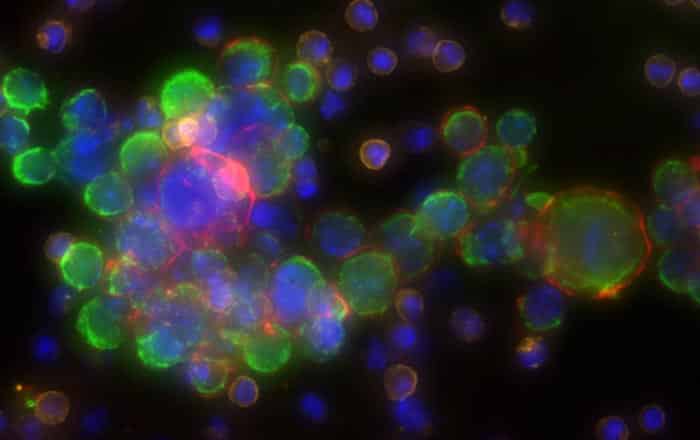
Blood-based tests represent the fastest growing segment of breast cancer diagnostics. Liquid biopsy, and specifically circulating tumour cell (CTC) technology, addresses the gaps in current care directly.
At Frontier Diagnostics, we are developing next generation CTC diagnostic platforms – designed for clinical scalability and commercial deployment. We are entering a market with proven demand and a clear unmet need, where previous CTC technology has stumbled but where Frontier Diagnostics is charting new territory and a radical improvement to the previous technology.
This convergence is where significant value is created.