
Blood tests for cancer recurrence – how CTC monitoring could support follow-up care

Blood Tests for Cancer Recurrence: How CTC monitoring could support follow-up care

Completing cancer treatment is a significant milestone. But for many patients, the period that follows is defined not by relief, but by anxiety- wondering whether the cancer will come back, and whether they will know in time if it does. This is something which can last for the rest of their lives.

Current follow-up care typically involves periodic clinical reviews and imaging. These are important. They are also, in many cases, insufficient to detect recurrence at the earliest possible biological stage. And we know that early detection can save lives.
Circulating tumour cell (CTC) monitoring is looking to change this. Here is how.

The surveillance gap
When a patient finishes primary treatment, they enter a surveillance phase. The goal is to detect any sign that the cancer has returned as early as possible. The challenge is that standard surveillance tools are designed to detect structural change. Imaging can show a mass that has grown large enough to be visible. A clinical examination can identify symptoms that have already developed. By the time these tools detect recurrence, the biology has often been signalling for some time.

What CTC monitoring adds
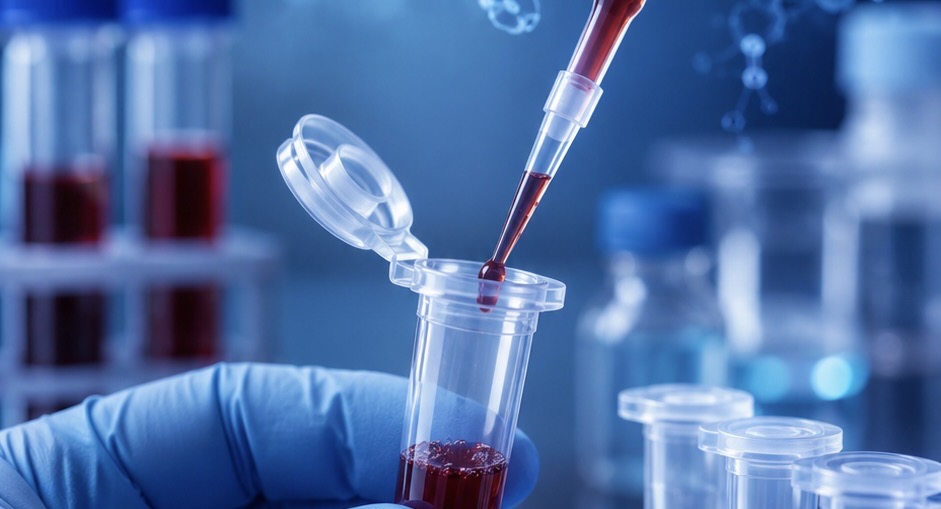
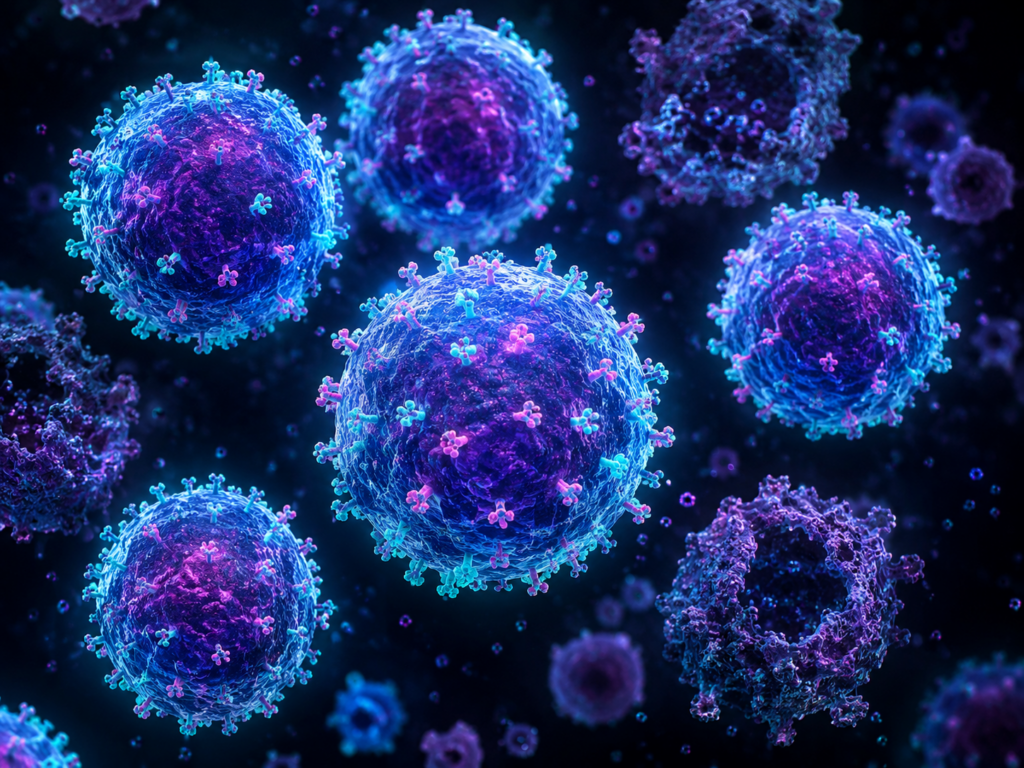
Circulating tumour cells are shed by cancer cells into the bloodstream. In a patient who has completed treatment, the presence of CTCs — and the trajectory of CTC counts over time — provides a biological signal that can precede structural change.
Research in breast cancer and other tumour types has demonstrated that rising CTC counts during post-treatment surveillance are associated with an increased risk of clinical recurrence. In some studies, CTC changes have preceded imaging-detectable relapse by weeks to months.
Earlier detection of recurrence opens up earlier intervention. And earlier intervention, in most cancer types, is associated with more treatment options and better outcomes.
What this might look like

• A blood draw at regular intervals — typically every two to three months, aligned with existing follow-up appointments
• CTC enumeration from the blood sample — counting the number of circulating tumour cells present
• Tracking changes over time — a stable or a declining low count is reassuring; a rising count warrants further investigation
• Integration alongside standard imaging and clinical review, not as a replacement

The patient experience
For patients, the practical reality of CTC monitoring is very different from other surveillance tools. A blood draw takes minutes, requires no preparation, and can be carried out at a routine appointment. For patients already carrying the psychological burden of post-treatment uncertainty, regular access to a biological data point has real value.

Where Frontier Diagnostics fits in
At Frontier Diagnostics, post-treatment monitoring from Stage 1 to Stage 4 tumours is one of the clearest potential applications of our CTC detection technology. We believe the surveillance gap in cancer care is real, and that liquid biopsy- specifically whole-cell CTC analysis- could be one of the most powerful tools available to close it.
Circulating Tumour Cells (CTCs) and breast cancer

Circulating Tumour Cells in Breast Cancer: from discarded technology to new possibilities

Breast cancer is the most commonly diagnosed cancer in the UK, with almost 60,000 new cases each year and incidence rates are increasing. According to CR UK, incidences of breast cancer have increased by 20% since the early 1990s. So what can we do? Early detection saves lives- that is not a slogan, it is a clinical fact. And the tools available to detect, monitor and understand breast cancer are improving.
The next generation of Circulating Tumour Cell (CTC) technology is one of those advances. Here is what it is and what it might mean.

What are Circulating Tumour cells?

When a breast tumour grows, it does not stay entirely in one place. Cancer cells break away from the tumour and enter the bloodstream. These are Circulating Tumour cells or CTCs.
Their presence in the blood is significant. CTC technology is making significant progress- both in enumerating circulating tumour cells and in analysing their biological characteristics.

How could CTC testing be used?

• Prior to treatment — to establish a baseline CTC count and inform prognosis and the selection of treatment options
• During treatment — to monitor treatment response, with rising counts potentially signalling resistance or progression
• After treatment — as part of recurrence surveillance, providing a biological signal that may precede clinical or imaging evidence of relapse

What does this mean?

CTC testing offers something a scan or tissue biopsy cannot: a regular non-invasive window into what is happening biologically. A regular blood test to track tumour biology over time is a fundamentally different experience from a procedure such as a tissue biopsy.
It also means insights might be grounded in more information — we’re looking not just for ‘the scan looks stable’ but ‘your CTC count has remained low since the end of treatment’. For many patients, that reassurance- or early warning- could be meaningful.

Where does Frontier Diagnostics fit in?

At Frontier Diagnostics, breast cancer is at the heart of our clinical focus. We’re working on CTC technology to develop the kind of accurate, actionable information that could genuinely change outcomes.

References
1. 59,413 new cases of breast cancer each year in the UK, 2021-22, CRUK, Cancer Research UK
2. 19.8% increase in incidences of breast cancer in the UK, CRUK, Cancer Research UK

Why should oncology need to learn from aviation?

In 1903, the Wright brothers made the first powered flight. For the first few decades of aviation, maintenance was largely reactive – inspect the aircraft, fix what’s broken, fly again. As aircraft became more complex and the consequences of failure more sever, this approach became untenable. The industry moved, gradually and then decisively, from reactive, to preventative, to predictive and finally to continuous monitoring – tracking the condition of critical systems in real time, detecting the early signal pf a problem before it becomes a catastrophic one.

Formula 1 followed a similar path. So did manufacturing, energy and shipping. Across industry after industry, the shift from “fix it when it’s broken” periodic inspection to continuous monitoring produced the same result: fewer failiures, earlier intervention, better outcomes.

Medicine has been slower to make this transition. And in oncology, the gap between where monitoring currently sits and where it could be is one of the most significant unresolved challenges in cancer care. Of course, this simplified analogy ignores the complex journey the aviation industry took to make this a reality. Similarly, in oncology, the clinical, regulatory and pathway infrastructure required to deliver on continuous monitoring still being built- just as the airworthiness regulatory framework was a pre-requisite for aviation’s shift.

What periodic inspection looks like in cancer care
When a patient finishes a course of breast cancer treatment-surgery, chemotherapy, radiotherapy, or a combination – they enter a surveillance phase. The structure of that surveillance varies by cancer type, treatment history and clinical protocol. In advanced cases, it looks something like this: a review appointment every three to six months, imaging at defined intervals, blood tests as indicated. In Stage 3 or less, this might look like an annual mammogram and a phone number to an answering machine.

Such surveillance can be valuable. It is, however, not sufficient.

The problem is not that clinicians are not paying attention. The problem is that the tools being used are designed to detect change once it has become structurally visible. A scan shows a mass that has grown large enough to be seen. A clinical examination identified symptoms that have already developed. By the time these tools detect a problem, the biology has often been active for some time.

In a patient who has completed cancer treatment, there is currently no routine way to know what is happening biologically between appointments or even sometimes if that patient is indeed in remission. The period between reviews is, in a meaningful sense, a monitoring gap.

Why continuous monitoring changes the landscape
The case for continuous monitoring in cancer care is the same as the case for it in every other field where it has been adopted: earlier detection of change leads to earlier intervention, and earlier intervention leads to better outcomes.

In oncology, the evidence for this is clear. Caner detected at an earlier stage is associated with better survival across almost every tumour type. Recurrence detected earlier means more treatment options, more time and in many cases a fundamentally different clinical trajectory for the patient.

The question is not whether earlier detection matters. The question is how to achieve it without placing an unacceptable burden on patients or healthcare systems.

Where liquid biopsy fits
Liquid biopsy- the detection and analysis of cancer-related material circulating in the bloodstream- is one of the most promising tools for closing the monitoring gap. Unlike imaging, it does not require specialist equipment at the point of care. Unlike a tissue biopsy, it does not require an invasive procedure. A blood draw, processed in a laboratory, could be repeated at regular intervals with minimal burden to the patient.

Circulating tumour cell (CTC) technology is one of the most developed forms of liquid biopsy. CTCs are whole cancer cells that shed from a. tumour into the bloodstream. Their presence, their number, their characteristics and the way this can change over time could provide a biological signal – to be tracked longitudinally- not just at a single point in time, but continuously across the course of treatment and into the surveillance period that follows.

This is not the same as a real-time continuous monitor. A blood test every two or three months is not equivalent to the second by second telemetry of a Formula 1 care. But it is a fundamentally different approach from a scan every six months – and for many patients, it represents a meaningful shift in what clinical monitoring can achieve.

The barriers to wider adoption- reputation
CTC technology has had a rocky start- and legacy systems have not managed to live up to the initial promise. However this is changing- CTC technology is reinventing itself and solving many of the sticky issues from legacy systems.

In other words, these are solvable problems. They are being worked on. But there are the reason that a technology with genuine clinical utility has not yet reached patients who could benefit from it.

Where Frontier Diagnostics fits in
At Frontier Diagnostics, our focus is circulating tumour cell technology- analysis that provides the richest biological signal from a blood sample. We are working to make CTC testing accurate, accessible, and clinically actionable for the patients and healthcare professionals who need it.

Our Sentinel qCTC platform analyses living, intact circulating tumour cells from a routine blood draw, providing a biological characterisation that gives beyond simple enumeration. Sentinel qCTC, Frontier’s CTC technology platform, is currently for Research Use Only. It is not approved or cleared for clinical diagnostic use.

The monitoring gap in cancer care is real. The technology to begin closing it exists. Making that transition happen is the work we are committed to delivering.

Why CTC technology hasn’t entered clinical practice – yet!

Circulating tumour cell (CTC) analysis holds enormous promise for precision cancer diagnostics. So why hasn’t it become a standard clinical tool?

The answer lies in three fundamental limitation of legacy CTC systems.

First, too few cells are being isolated. Without sufficient cell numbers, the data generated is simply not robust enough to inform clinical decisions with confidence. This is even more limiting when clinicians need repeat measurements over time to track response or resistance from tumour biology.

Second, the cells, that are isolated, are not viable. Dead cells cannot be used for drug sensitivity testing – which means clinicians lose one of the most valuable opportunities that CTC analysis could offer: the ability to test which treatments a patient’s own tumour cells will respond to before committing to a course of therapy.

Third, many of the legacy systems could not assess CTC cell surface markers; which is critical as these markers can guide therapy selection, and without them, a significant dimension of clinical insight is lost. In practice, this could mean losing the ability to match patients to the most effective therapy.

These aren’t peripheral technical challenges. They are the core reasons CTC diagnostics has remained on the fringes of oncology despite decades of research.

Frontier Diagnostics is developing technology specifically designed to overcome each of these barriers – and bring CTC analysis where it belongs: into routine clinical care.

Tackling CTCs’ reputation head-on

Walk into almost any breast cancer conference and mention CTCs- Circulating Tumour Cells- and you’ll sense the discomfort immediately. The CTC diagnostics market has long been dogged by the limitations of early technologies: detecting only a handful of cells, then doing little more than counting them.That reputation was further damaged by companies marketing tests directly to some of the most vulnerable people – those worried they might have breast cancer.

That era is now over.

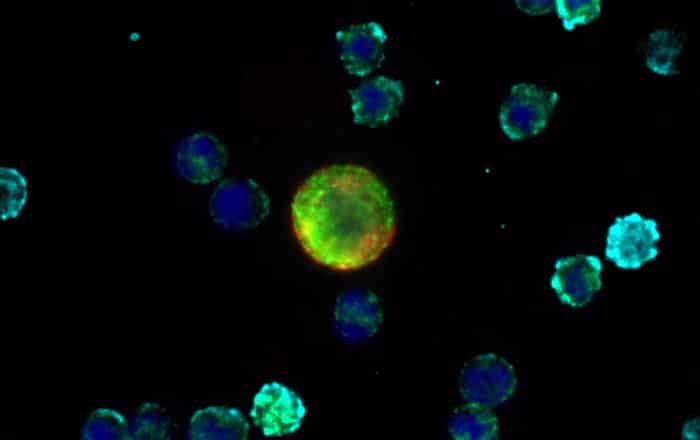
We’re no longer talking about identifying and counting a few isolated circulating tumour cells. Today’s breakthrough technology can identify thousands of cells, repeatedly, with consistent accuracy. More importantly, it’s no longer just about quantity. It’s about understanding the biology of these cells- their characteristics, behaviour, and evolution over time.

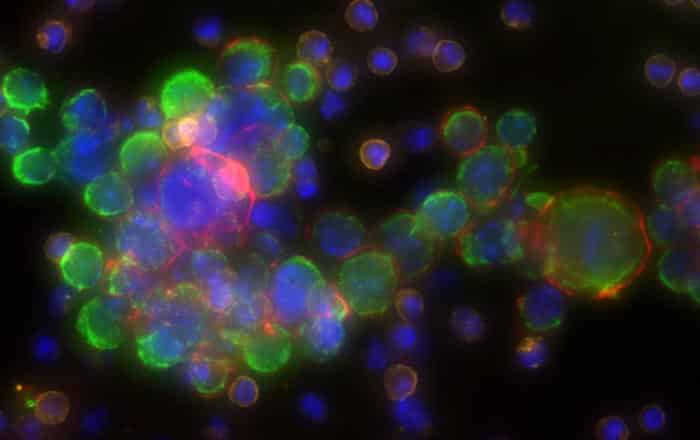
This transforms what CTC testing can achieve. It supports early detection through reliable, high-volume identification, supports truly personalised treatment decisions, and allows for ongoing monitoring through regular, minimally invasive tests. Crucially, it also opens the door to relapse monitoring, with the potential to identify emerging tumours- or even suspicious cell clusters- up to 18 months earlier than traditional screening methods.

CTCs are no longer a dirty word. They’re becoming a powerful tool in the future of breast cancer detection, treatment and long-term care.

The case for CTC innovation – the breast cancer stats!

Breast cancer represents one of the most significant and durable opportunities in the global oncology diagnostics sector. Breast cancer is the most common cancer in women around the world, with around 2.3 million new cases recorded in 2022, according to data from WHO’s Global Cancer Observatory (GLOBOCAN). By 2050, new cases and deaths are projected to increase by 38% and 68% respectively, disproportionately impacting lower income countries.


The global breast cancer diagnostics market reflects this urgency at scale.  The market was valued at approximately $4,42 billion in 2023 and is forecast to reach $8.27 billion by 2032, growing at a CAGR of around 7.2% (Zion Market Research, 2024). This growth is underpinned by structural changes: ageing populations, rising global incidence, broadening screening mandates and sustained healthcare investment across both developed and emerging markets. While North America dominates, Asia-Pacific is projected to expand at the fastest rate over the coming decade.

Yet market size alone does not define the opportunity. The more compelling story lies in the inadequacy of existing solutions. Tissue biopsy – still the diagnostic gold standard – is invasive, slow , costly and unable to capture the dynamic, evolving nature of tumour biology. Mammography and imaging represent the largest market segment, (51% of revenue in 2025) – yet carry well-documented limitations, not least in those with dense breast tissue. The result is a diagnostics landscape that is large, growing and ripe for innovation.

Blood-based tests represent the fastest growing segment of breast cancer diagnostics. Liquid biopsy, and specifically circulating tumour cell (CTC) technology, addresses the gaps in current care directly.

At Frontier Diagnostics, we are developing next generation CTC diagnostic platforms – designed for clinical scalability and commercial deployment. We are entering a market with proven demand and a clear unmet need, where previous CTC technology has stumbled but where Frontier Diagnostics is charting new territory and a radical improvement to the previous technology.

This convergence is where significant value is created.

World Cancer Day & the UK’s National Cancer Plan Launch

World Cancer Day, has been in the headlines this week – and here at Frontier Diagnostics – we’re united by a shared vision; to transform the landscape of diagnostics and care for all those affected by cancer. So we welcome the launch of the UK Government’s National Cancer Plan.


So what is a cancer plan/strategy and why does it matter?

The International Cancer Benchmarking Partnership (ICBP) has monitored cancer data across seven countries since the 90s when the UK and Denmark were bottom of the table. Since then, Denmark’s improvement has been remarkable – thanks to successive cancer plans – each targeting their weaker areas with focused targets, transparent monitoring, absolute patient focus and significant investment.

However, unlike Denmark, the UK has had a fragmented approach with Scotland, Wales and N. Ireland having strategies in place, but England relying on the NHS Long Term Plan (2019) – which wasn’t specific to cancer and was further derailed by COVID. So the UK has been lagging behind its European neighbours  in key measures; such as the five year cancer survival rates.

So what are the headlines and will it help those with breast cancer in the UK?

  • Three out of four patients diagnosed from 2025 will be cancer-free or living well after five years, (up from 60% currently) following record investment in the NHS – which is described as the fastest improvement in cancer outcomes this century!
  • The NHS will meet all cancer waiting time standards by 2029, with hundreds of thousands more patients treated within 62 days- a target which hasn’t been met since 2015.

Faster Diagnosis

  • The plan pushes for cancer to be diagnosed earlier and more quickly, which is crucial for breast cancer outcomes because earlier-stage detection improves survival.
  • It includes measures to speed up diagnostics and meet listing time standards by 2029, so women referred with suspected breast cancer symptoms should get faster scans and results.

Improving Screening Uptake

  • While breast screening is not a new policy in the plan, the strategy’s emphasis on boosting screening and reducing inequalities supports efforts to increase breast screening participation, especially in underserved communities.
  • Earlier detection via screening increases the chances of catching breast cancer when it’s most treatable.

More Personalised Treatment

  • Wider use of genomic and molecular testing supporting more tailored treatment decisions benefiting all breast cancer sub-types

Better Access to Specialist Care

  • Emphasis on specialist cancer centres, multidisciplinary teams and modern surgical techniques to improve consistency and quality of breast cancer treatment across England.

Improved Support for Life beyond Cancer

  • Recognition of the growing number of people living with and beyond breast cancer, with a focus on recovery, quality of life and long-term support.

Better Access to Clinical Trials

  • Plans to enable patients to search and sign up for clinical trials via the NHS app – tied into national databases.

The plan is not breast cancer specific, but its focus on speed, early diagnosis, innovation and equity addresses many of the issues that matter to people with breast cancer. And from a Frontier perspective; there is a huge opportunity for us to support the UK Government’s ambitious plan over the next few years with our potential for diagnostics, personalised treatment and monitoring for recurrence support.

Demystifying the fear of recurrence

– PART 3 OF OUR BREAST CANCER AWARENESS MONTH SERIES

So – you’ve already been unlucky and have been diagnosed with breast cancer once and managed to get through a treatment regime and beyond. Now people around you behave as if ‘everything’s back to normal”, yet for you, life will never be the same again and your inner monologue around any signs of it recurring can take over your life.

So how do you cope? Here’s what I’ve learned from living with it and being diagnosed a second time around.

  1. Be honest with yourself about how you feel – yes there will be times when you don’t want to think about it but acknowledging how you actually feel about it is the first critical step in actively managing your natural fears whilst managing to get on and enjoy your life. It’s normal to feel fear, it’s normal to feel your reactions to everyday aches and pains are OTT.
  2. Inform yourself – stay in control – understand your prognosis and what symptoms to look out for. You may feel better if you can rule out certain things and know they’re not related. Talk to your medical team so you know exactly what you should be looking out for and how to get in touch, should you need to do so. Remember it’s your body and you’re the expert who’s likely to notice any changes first. Don’t worry about feeling you’re making a fuss – it’s their job!
  3. Don’t be afraid of talking to people about it – family and friends can be very supportive but only if they know what you’re feeling and facing. You don’t have to do this alone. There are also really supportive online chatrooms and forums where you can talk to other women going through the same thing and share experiences.
  4. Remember that you know more now – think back to how little you may have known when you were first diagnosed with breast cancer. You’ve been through it and can use all that experience to help you now.
  5. Explore self-care – you’ve been through a lot and it is time to put yourself first and look after yourself – make time, explore whatever might work for you – there are a number of charities, which continue to offer complementary therapies to women who’ve been through breast cancer. Have a look at what might work for you.
  6. Explore coping strategies – what works for you? The one thing we all have is a greater understanding than most people of how precious life is. What will make you feel better? Try things. But know that it’s not you being a neurotic mess – this is normal and you’re not alone!

Supporting someone with a breast cancer diagnosis

3 THINGS NOT TO SAY AND WHAT YOU NEED TO SAY INSTEAD.

Being diagnosed with breast cancer is possibly one of the worst things which happen to anyone. And those around us, even our closest friends and family find it very hard to know what to do and what to say. This sometimes means they say the wrong thing, not because they’re deliberately trying to hurt us or be unhelpful – but because it’s so outside their own experience – often they’re looking at it from their own perspective and worrying about not being supportive.

Instead, if you have a close friend or family member who’s received a cancer diagnosis. Remember – it’s not about you – it’s about them and making sure they know you care.

1. Acknowledge that something dreadful has happened to them.
Number one thing not to say is– you’ll be fine! You don’t know that and it’s not helpful. Just acknowledge that it is hard by saying so. “That’s so awful/shit for you. I’m so sorry.”
Equally – I know you’ll get through this – you’re really strong – they might not be feeling strong and you need to support them in showing emotion if that’s what they need.

2. Empathise – Above all, let them know you care, simply by saying so; “I’m here for you , I love you and I’m thinking of you.” Think of useful things you can do, such as giving them a healthy meal so they don’t have to cook, rather than bland offers of “Let me know if there’s anything I can do to help.”

3. Take your lead from them – everyone reacts differently to a breast cancer diagnosis – the right way for them will be how they react. If they want to talk about – listen. If they don’t want to talk about it – let them know that’s fine and that if they ever do -you’re there to listen. Sometimes we just want a dose of normality!

Under no circumstances, talk about your neighbour, cousin, other friend – who had breast cancer and is now sky diving or whatever. Or use someone else or something you’ve read to tell them they’re going to be ok.

Above all – be there and listen.

Royal Marsden Breast Cancer Meeting

Frontier’s Dr Chris Lee joined the 18th Annual Royal Marsden Breast Cancer Meeting on 3rd October last week, at the Royal College of Physicians, London. The meeting, which brings together leading experts in breast cancer care, amongst other topics, focused on Supportive care and survivorship – specifically looking at Managing treatment side effects (Dr Matthew Brown) and Surgical options for lymphoedema (Mr. Kelvin Ramsey).

Dr Lee explained, “What came out in our discussions, was the critical importance of embedding quality-of-life interventions at the same time as oncological treatment; such as;

  • Early recognition and management with compression, skincare and exercise
  • Manual Lymphatic drainage and physiotherapy
  • Surgical options”.

Interestingly, Dr Oreste Gentilini (Milan) during the keynote, looked at reducing unnecessary axillary interventions such as lymph node removal, which would avoid patients risking the development of complications such as lymphoedema in the first place. Dr Gentilini reviewed several clinical trials ,which seemed to confirm that axillary clearance or lymph node removal, and even sentinel node biopsies, might be safely avoided.

In the Oncology update, Professor Nick Turner and Dr Michael Hubank explored how precision molecular testing has become part of routine care, effectively tailoring treatments to tumour biology.

Dr Lee summarised, “It was a good mix of practical guidance, cutting-edge science and at times, quite thoughtful debate!”