ESMO Congress 2025 – Berlin

ESMO Congress 2025 – Berlin

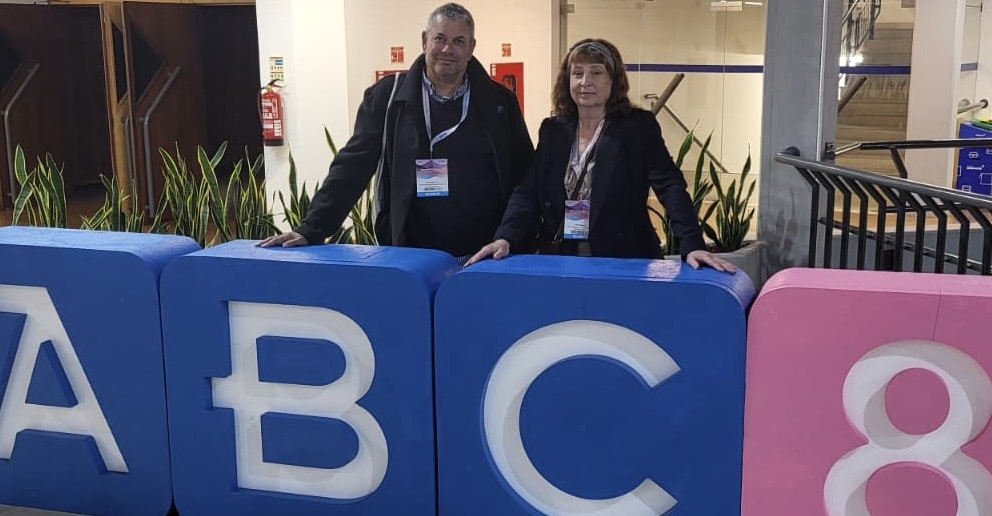
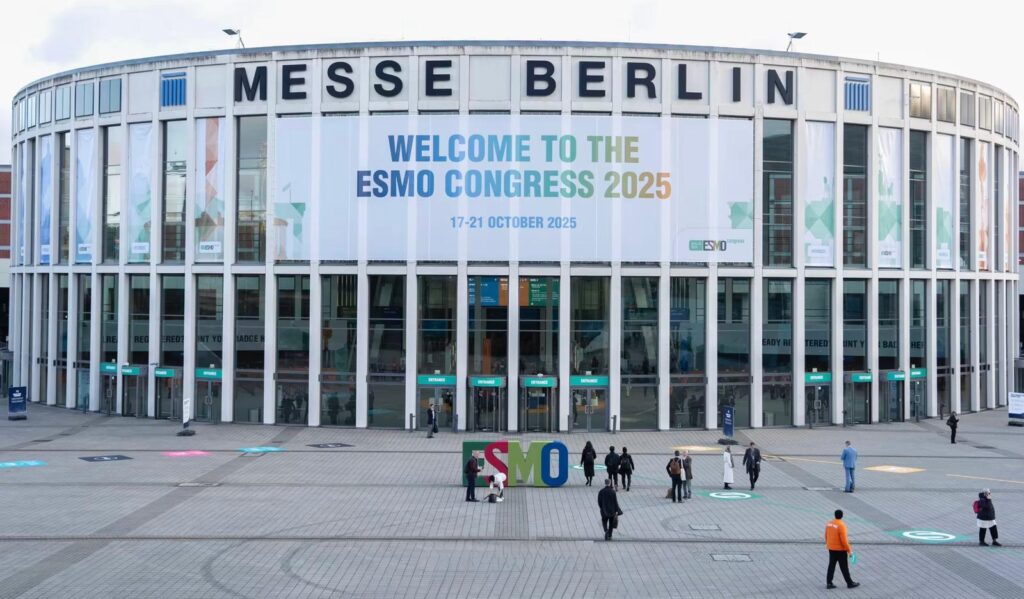
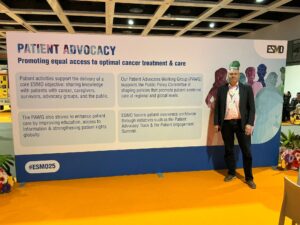
This week saw Frontier’s Dr Martin Burow and Dr Chris Lee at Breast Cancer 2025 in Berlin, one of the most influential global meetings dedicated to innovation and clinical progress in breast cancer research and treatment.

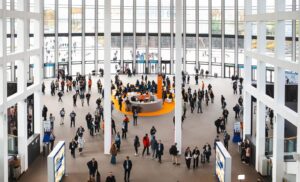
“With 33,000 participants, this is a major opportunity to connect with researchers and clinicians on the latest thinking. There is so much going on – it’s overwhelming – a fertile ground for new collaboration.”

Our participation at ESMO marks a key milestone in strengthening international collaboration and advancing our Sentinel qCTC system, as we continue to build a strong clinical and research network across Asia and Europe. In particular, the conference presents a valuable opportunity to:

  • Engage with a wide network of clinicians from the Philippines, expanding our regional connections and exploring potential integration of Sentinel qCTC into ongoing and future breast cancer research initiatives across Southeast Asia.
  • Reconnect with Japanese research partners following our productive meetings earlier this year in Japan, deepening dialogue around joint studies, CTC technology validation, and translational applications.
  • Identify new collaborative pathways with European investigators, fostering partnerships that align with Frontiers’ vision of precision oncology through liquid biopsy innovation.
SCIENTIFIC AND STRATEGIC FOCUS

The ESMO Breast Cancer Congress provides a comprehensive update on the rapidly evolving field of breast cancer care—covering diagnostics, molecular biomarkers, targeted therapies, and clinical management. For the Frontier team, participation will deliver insights of immense strategic value to the ongoing development and deployment of the Sentinel qCTC system, specifically through:

  • Advancing knowledge in breast cancer diagnostics and biomarkers, directly informing how CTC detection and profiling can enhance personalized treatment decisions.
  • Understanding new developments in antibody-drug conjugates (ADCs) and how these emerging therapeutic classes could be monitored via CTC phenotyping and molecular characterisation.
  • Gaining a deeper grasp of subtype-specific strategies—for Luminal, HER2-positive, HER2-low, and triple-negative breast cancers—where real-time CTC tracking can be pivotal in assessing therapeutic response and disease progression.
  • Exploring special considerations across diverse patient subgroups, supporting Sentinel qCTC’s adaptability to a range of clinical and biological contexts.

By connecting with world-leading clinicians and researchers, Frontier continues to advance its mission: transforming precision oncology through accessible, high-performance CTC technology that empowers clinicians to make data-driven, patient-specific decisions.
Demystifying the fear of recurrence

– PART 3 OF OUR BREAST CANCER AWARENESS MONTH SERIES

So – you’ve already been unlucky and have been diagnosed with breast cancer once and managed to get through a treatment regime and beyond. Now people around you behave as if ‘everything’s back to normal”, yet for you, life will never be the same again and your inner monologue around any signs of it recurring can take over your life.

So how do you cope? Here’s what I’ve learned from living with it and being diagnosed a second time around.

  1. Be honest with yourself about how you feel – yes there will be times when you don’t want to think about it but acknowledging how you actually feel about it is the first critical step in actively managing your natural fears whilst managing to get on and enjoy your life. It’s normal to feel fear, it’s normal to feel your reactions to everyday aches and pains are OTT.
  2. Inform yourself – stay in control – understand your prognosis and what symptoms to look out for. You may feel better if you can rule out certain things and know they’re not related. Talk to your medical team so you know exactly what you should be looking out for and how to get in touch, should you need to do so. Remember it’s your body and you’re the expert who’s likely to notice any changes first. Don’t worry about feeling you’re making a fuss – it’s their job!
  3. Don’t be afraid of talking to people about it – family and friends can be very supportive but only if they know what you’re feeling and facing. You don’t have to do this alone. There are also really supportive online chatrooms and forums where you can talk to other women going through the same thing and share experiences.
  4. Remember that you know more now – think back to how little you may have known when you were first diagnosed with breast cancer. You’ve been through it and can use all that experience to help you now.
  5. Explore self-care – you’ve been through a lot and it is time to put yourself first and look after yourself – make time, explore whatever might work for you – there are a number of charities, which continue to offer complementary therapies to women who’ve been through breast cancer. Have a look at what might work for you.
  6. Explore coping strategies – what works for you? The one thing we all have is a greater understanding than most people of how precious life is. What will make you feel better? Try things. But know that it’s not you being a neurotic mess – this is normal and you’re not alone!

Supporting someone with a breast cancer diagnosis

3 THINGS NOT TO SAY AND WHAT YOU NEED TO SAY INSTEAD.

Being diagnosed with breast cancer is possibly one of the worst things which happen to anyone. And those around us, even our closest friends and family find it very hard to know what to do and what to say. This sometimes means they say the wrong thing, not because they’re deliberately trying to hurt us or be unhelpful – but because it’s so outside their own experience – often they’re looking at it from their own perspective and worrying about not being supportive.

Instead, if you have a close friend or family member who’s received a cancer diagnosis. Remember – it’s not about you – it’s about them and making sure they know you care.

1. Acknowledge that something dreadful has happened to them.
Number one thing not to say is– you’ll be fine! You don’t know that and it’s not helpful. Just acknowledge that it is hard by saying so. “That’s so awful/shit for you. I’m so sorry.”
Equally – I know you’ll get through this – you’re really strong – they might not be feeling strong and you need to support them in showing emotion if that’s what they need.

2. Empathise – Above all, let them know you care, simply by saying so; “I’m here for you , I love you and I’m thinking of you.” Think of useful things you can do, such as giving them a healthy meal so they don’t have to cook, rather than bland offers of “Let me know if there’s anything I can do to help.”

3. Take your lead from them – everyone reacts differently to a breast cancer diagnosis – the right way for them will be how they react. If they want to talk about – listen. If they don’t want to talk about it – let them know that’s fine and that if they ever do -you’re there to listen. Sometimes we just want a dose of normality!

Under no circumstances, talk about your neighbour, cousin, other friend – who had breast cancer and is now sky diving or whatever. Or use someone else or something you’ve read to tell them they’re going to be ok.

Above all – be there and listen.

Royal Marsden Breast Cancer Meeting

Frontier’s Dr Chris Lee joined the 18th Annual Royal Marsden Breast Cancer Meeting on 3rd October last week, at the Royal College of Physicians, London. The meeting, which brings together leading experts in breast cancer care, amongst other topics, focused on Supportive care and survivorship – specifically looking at Managing treatment side effects (Dr Matthew Brown) and Surgical options for lymphoedema (Mr. Kelvin Ramsey).

Dr Lee explained, “What came out in our discussions, was the critical importance of embedding quality-of-life interventions at the same time as oncological treatment; such as;

  • Early recognition and management with compression, skincare and exercise
  • Manual Lymphatic drainage and physiotherapy
  • Surgical options”.

Interestingly, Dr Oreste Gentilini (Milan) during the keynote, looked at reducing unnecessary axillary interventions such as lymph node removal, which would avoid patients risking the development of complications such as lymphoedema in the first place. Dr Gentilini reviewed several clinical trials ,which seemed to confirm that axillary clearance or lymph node removal, and even sentinel node biopsies, might be safely avoided.

In the Oncology update, Professor Nick Turner and Dr Michael Hubank explored how precision molecular testing has become part of routine care, effectively tailoring treatments to tumour biology.

Dr Lee summarised, “It was a good mix of practical guidance, cutting-edge science and at times, quite thoughtful debate!”

Frontier at ACTC 2025 – Thessaloniki

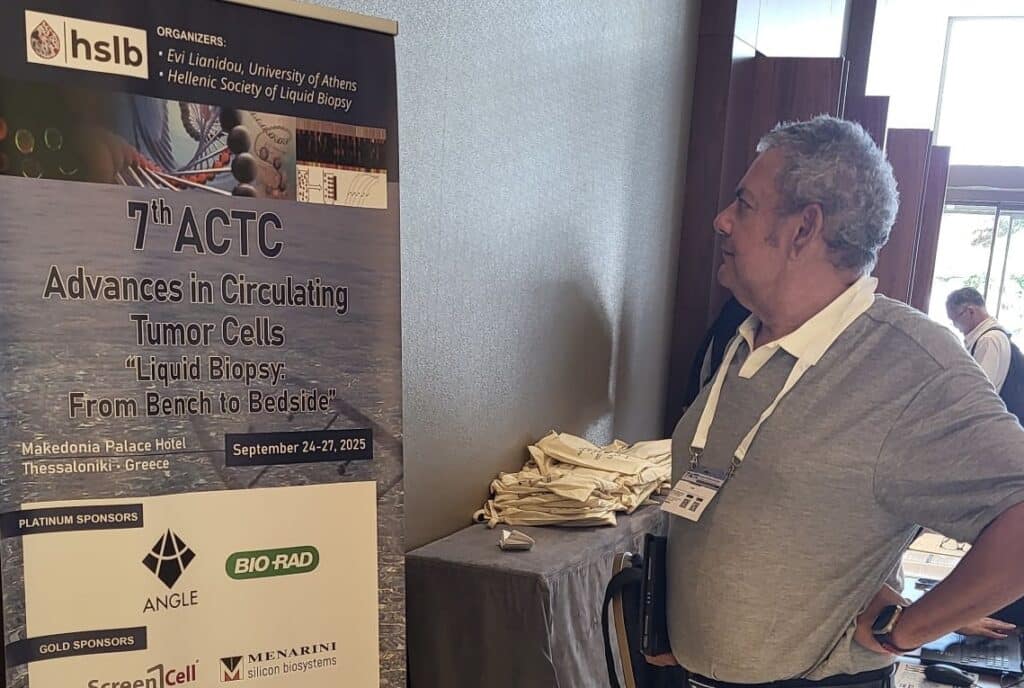
The 7th Advances in Circulating Tumor Cells (ACTC 2025) conference in Thessaloniki brought together international leaders in liquid biopsy research, from basic biology to clinical translation. Frontier’s own Dr. Lee and Dr. Burow were there to evaluate the global state of the field and position the qCTC system within ongoing conversations about the future of circulating tumour cell (CTC) technologies.

Dr Lee commented; “It’s really important for us to talk to key opinion leaders, compare our qCTC with others and gather the latest intelligence on validation pathways and clinical adoption challenges. Just sharing perspectives at plenary and poster sessions has meant we’re able to assess how our approach – balancing technical precision with clinical usability – —compares to emerging enrichment-free and multi-omic competitors. These insights are critical for refining qCTC development and ensuring it meets both scientific rigour and clinical relevance.”

Frontier’s qCTC System in the Context of ACTC
A central theme at ACTC 2025 has been the urgent need for quantitative, reproducible, and clinically actionable CTC analysis. Presentations have highlighted how enrichment-free platforms, high-volume detection, and multi-omic profiling are reshaping expectations for liquid biopsy. Against this backdrop, the qCTC system’s vision—delivering reliable CTC enumeration coupled with molecular depth from a single blood draw—is strongly aligned with where the field is heading.
The emphasis on minimal residual disease detection, therapy monitoring, and integration of CTC and ctDNA further validated Frontier’s strategy. While Frontier did not present at this meeting, the discourse confirmed that the qCTC platform’s focus on quantification and translational applicability directly addresses gaps acknowledged by the community.
From Frontier’s perspective, the ACTC 2025 meeting reinforced several points:

  • Quantification matters: The field recognises that reliable enumeration remains a cornerstone for CTC utility in precision oncology.
  • Integration is the future: Combining CTC analysis with ctDNA and other molecular readouts will define the next generation of liquid biopsy.
  • Standardisation and validation are essential: For regulatory and clinical uptake, reproducibility across centers and harmonised methodologies will be mandatory.
  • Frontier is well positioned: The qCTC system already anticipates these needs, aiming to provide a platform that bridges technical innovation with direct clinical application.

Looking forward to October Breast Cancer Awareness – Check yourself

✨ DON’T FORGET TO CHECK YOURSELF ✨

If you’re lucky and haven’t been diagnosed with breast cancer – or if you’ve been through it and come out the other side – it’s still so important to keep an eye on your breast health.

But here’s the good news: there’s no strict technique you need to learn. Our experts (and guidelines worldwide) now reassure us that you don’t need to follow a complicated monthly “self-exam.” What matters most is simply getting to know what’s normal for you so that you notice when something change

SO, HOW DO YOU DO IT?

– There’s no single “correct” way. You might choose a moment that works for you – in the shower, while getting dressed, or even relaxing in the bath.
– The key is to notice your normal – the look and feel of your breasts.
– That way, if something changes, you will pick it up more quickly.

💡 Tip: Some people find it helpful to schedule a monthly reminder on their phone, just to build the habit.

WHAT CHANGES SHOULD I LOOK OUT FOR?

Even if you check regularly, not every lump will be easy to feel – sometimes tumours are hidden. That’s why it’s important to look out for a range of possible clues, including:

– A new lump or thickening in the breast or armpit
– A change in size, shape, or feel of the breast
– Skin changes (dimpling, puckering, redness, rash, or an “orange peel” texture)
– Nipple changes (turning in, new discharge, or bleeding)
– Persistent pain in one spot

If you notice any of these changes, book an appointment with your GP promptly. Most changes won’t be cancer, but it is always better to be safe.

BREAST AWARENESS – SIMPLE CODES TO REMEMBER

The UK’s Five-Point Code

  1. Know what is normal for you
    2. Know what changes to look for
    3. Look and feel
    4. Report changes promptly
    5. Attend screening when invited

The AUK Initiative (Awareness, Understanding, Knowledge)

– Awareness → Be alert to your breast health
– Understanding → Know the signs and symptoms
– Knowledge → Feel confident to act quickly and attend screening

The Take-Home Message

🩷 You don’t need a strict exam routine.
🩷 You do need to know what feels right for your body.
🩷 If something changes, act quickly and see your GP.
🩷 And keep up with mammograms when you’re invited – they remain the best tool for early detection.

Early detection saves lives – so this October, make time for yourself.

Frontier in Japan – Dr Martin Burow & Dr Chris Lee

FRONTIER EXPANDS CLINICAL NETWORK AND SHOWCASES qCTC PLATFORM IN JAPAN

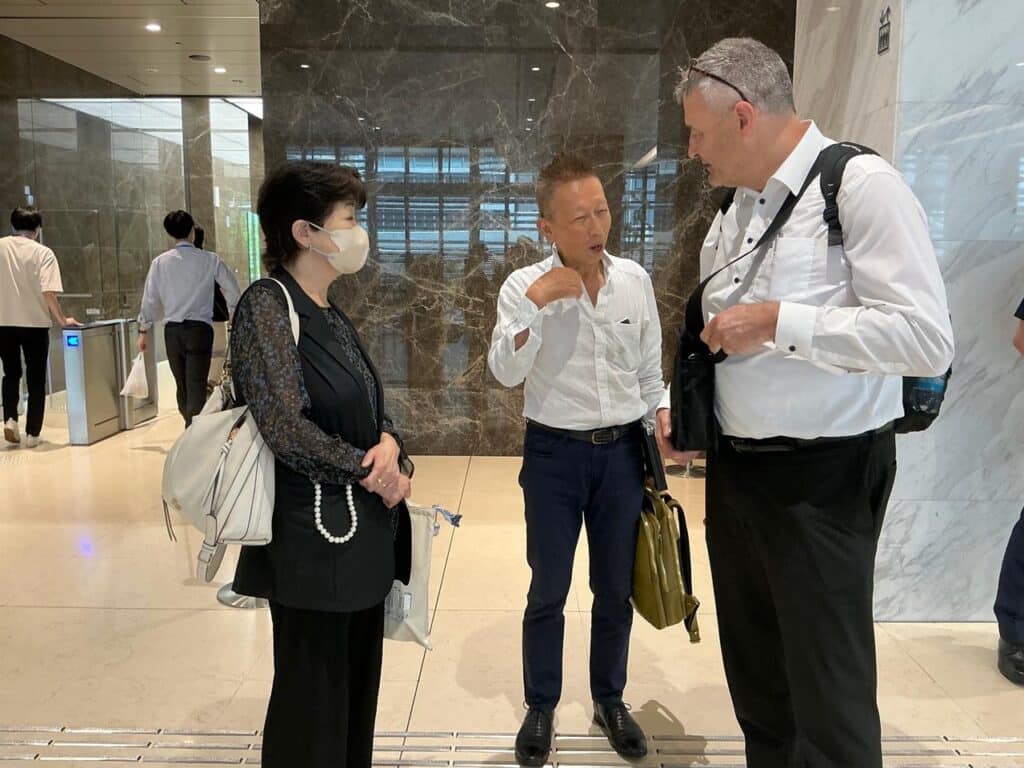
Frontier’s Dr. Martin Burow and Dr. Chris Lee have just returned from Japan, where they expanded the company’s clinical network and accelerated discussions on the use of Frontier’s Circulating Tumour Cell (qCTC) platform within one of the world’s most advanced oncology health systems.

“The trip completely exceeded my expectations. I had not expected to have the opportunity to meet so many key opinion leaders in oncology face-to-face and to see their immediate enthusiasm and real interest in working with us,” said Dr. Lee.

Frontier’s qCTC technology was exceptionally well received, with Japan’s leading researchers and biotech innovators recognising its potential to transform cancer monitoring. The vision of real-time, personalised treatment resonated strongly, particularly given that many current approaches still rely on outdated or static monitoring techniques. qCTC was viewed as a breakthrough tool that could help redefine standards of care.

Looking ahead, Dr. Burow commented: “Several major centres want to integrate qCTC into both NIH-funded and domestic clinical trials, so we are very excited to begin this next phase of work in Japan. The whole trip could not have gone better.”

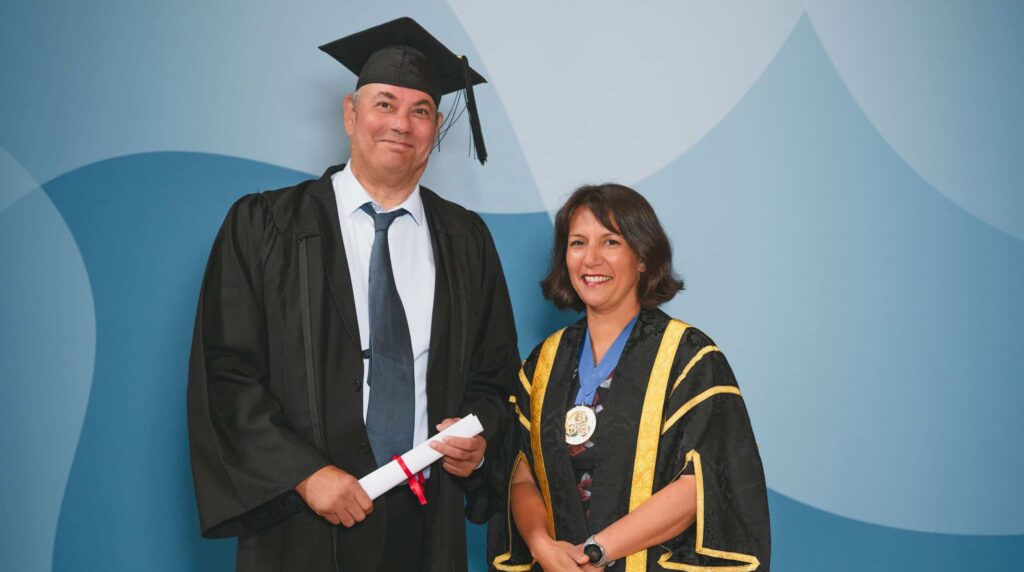
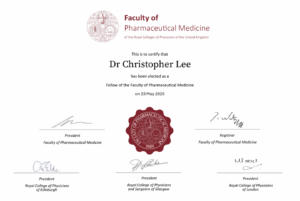
Our own Dr Chris Lee was recently awarded a Fellowship of the Faculty of Pharmaceutical Physicians

Receiving the Fellowship of the Faculty of Pharmaceutical Physicians represented a significant milestone in my professional journey. On the day of the award, I was honoured to receive it from the President of the Faculty, an occasion that reflected not only personal achievement but also the recognition of sustained contributions to the field of pharmaceutical medicine. The fellowship is a formal acknowledgement of commitment to advancing standards of practice, supporting innovation, and ensuring the safe and effective development of medicines. Among my professional achievements, I am most proud of contributing to initiatives that have improved clinical research standards and patient safety, while also mentoring colleagues and supporting the development of future leaders in the discipline. The award serves as both recognition of past accomplishments and motivation to continue advancing the profession.