
In 1903, the Wright brothers made the first powered flight. For the first few decades of aviation, maintenance was largely reactive – inspect the aircraft, fix what’s broken, fly again. As aircraft became more complex and the consequences of failure more sever, this approach became untenable. The industry moved, gradually and then decisively, from reactive, to preventative, to predictive and finally to continuous monitoring – tracking the condition of critical systems in real time, detecting the early signal pf a problem before it becomes a catastrophic one.
Formula 1 followed a similar path. So did manufacturing, energy and shipping. Across industry after industry, the shift from “fix it when it’s broken” periodic inspection to continuous monitoring produced the same result: fewer failiures, earlier intervention, better outcomes.
Medicine has been slower to make this transition. And in oncology, the gap between where monitoring currently sits and where it could be is one of the most significant unresolved challenges in cancer care. Of course, this simplified analogy ignores the complex journey the aviation industry took to make this a reality. Similarly, in oncology, the clinical, regulatory and pathway infrastructure required to deliver on continuous monitoring still being built- just as the airworthiness regulatory framework was a pre-requisite for aviation’s shift.
What periodic inspection looks like in cancer care
When a patient finishes a course of breast cancer treatment-surgery, chemotherapy, radiotherapy, or a combination – they enter a surveillance phase. The structure of that surveillance varies by cancer type, treatment history and clinical protocol. In advanced cases, it looks something like this: a review appointment every three to six months, imaging at defined intervals, blood tests as indicated. In Stage 3 or less, this might look like an annual mammogram and a phone number to an answering machine.
Such surveillance can be valuable. It is, however, not sufficient.
The problem is not that clinicians are not paying attention. The problem is that the tools being used are designed to detect change once it has become structurally visible. A scan shows a mass that has grown large enough to be seen. A clinical examination identified symptoms that have already developed. By the time these tools detect a problem, the biology has often been active for some time.
In a patient who has completed cancer treatment, there is currently no routine way to know what is happening biologically between appointments or even sometimes if that patient is indeed in remission. The period between reviews is, in a meaningful sense, a monitoring gap.
Why continuous monitoring changes the landscape
The case for continuous monitoring in cancer care is the same as the case for it in every other field where it has been adopted: earlier detection of change leads to earlier intervention, and earlier intervention leads to better outcomes.
In oncology, the evidence for this is clear. Caner detected at an earlier stage is associated with better survival across almost every tumour type. Recurrence detected earlier means more treatment options, more time and in many cases a fundamentally different clinical trajectory for the patient.
The question is not whether earlier detection matters. The question is how to achieve it without placing an unacceptable burden on patients or healthcare systems.
Where liquid biopsy fits
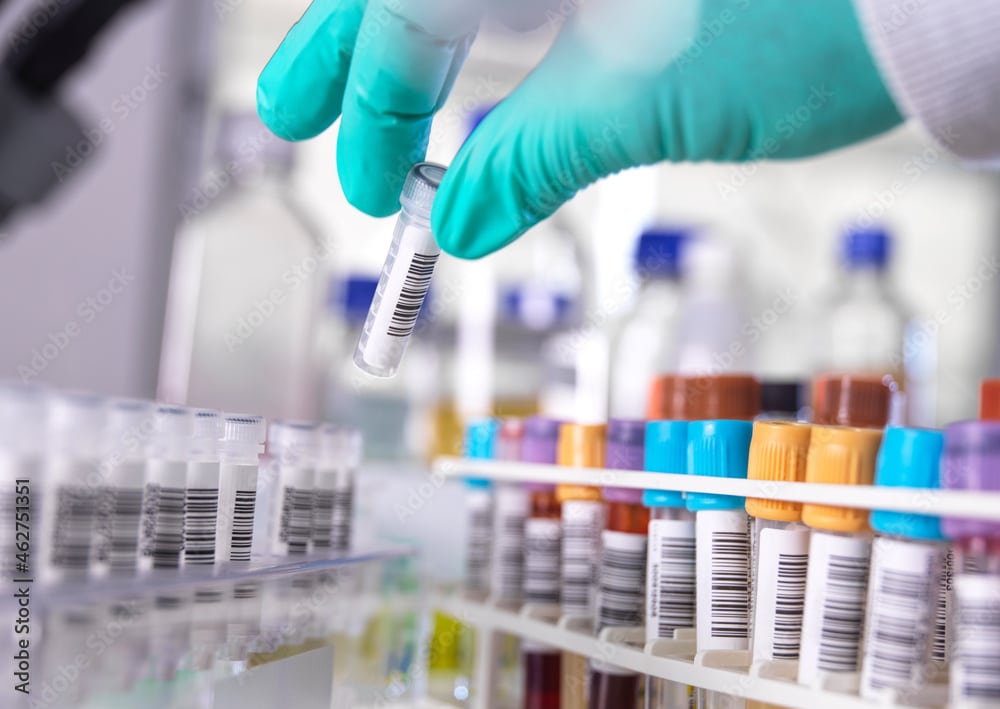
Liquid biopsy- the detection and analysis of cancer-related material circulating in the bloodstream- is one of the most promising tools for closing the monitoring gap. Unlike imaging, it does not require specialist equipment at the point of care. Unlike a tissue biopsy, it does not require an invasive procedure. A blood draw, processed in a laboratory, could be repeated at regular intervals with minimal burden to the patient.
Circulating tumour cell (CTC) technology is one of the most developed forms of liquid biopsy. CTCs are whole cancer cells that shed from a. tumour into the bloodstream. Their presence, their number, their characteristics and the way this can change over time could provide a biological signal – to be tracked longitudinally- not just at a single point in time, but continuously across the course of treatment and into the surveillance period that follows.
This is not the same as a real-time continuous monitor. A blood test every two or three months is not equivalent to the second by second telemetry of a Formula 1 care. But it is a fundamentally different approach from a scan every six months – and for many patients, it represents a meaningful shift in what clinical monitoring can achieve.
The barriers to wider adoption- reputation
CTC technology has had a rocky start- and legacy systems have not managed to live up to the initial promise. However this is changing- CTC technology is reinventing itself and solving many of the sticky issues from legacy systems.
In other words, these are solvable problems. They are being worked on. But there are the reason that a technology with genuine clinical utility has not yet reached patients who could benefit from it.
Where Frontier Diagnostics fits in
At Frontier Diagnostics, our focus is circulating tumour cell technology- analysis that provides the richest biological signal from a blood sample. We are working to make CTC testing accurate, accessible, and clinically actionable for the patients and healthcare professionals who need it.
Our Sentinel qCTC platform analyses living, intact circulating tumour cells from a routine blood draw, providing a biological characterisation that gives beyond simple enumeration. Sentinel qCTC, Frontier’s CTC technology platform, is currently for Research Use Only. It is not approved or cleared for clinical diagnostic use.
The monitoring gap in cancer care is real. The technology to begin closing it exists. Making that transition happen is the work we are committed to delivering.